Ever wonder why some Los Angeles neighborhoods feel busy and urban, while others somehow feel familiar the moment you arrive? Atwater Village has that effect on a lot of people. If you are trying to understand its appeal, the answer is not just one thing. It is the mix of geography, walkable streets, local businesses, older homes, and steady community life that gives this part of Northeast Los Angeles a true neighborhood feel. Let’s dive in.
Atwater Village feels tucked in
One reason Atwater Village feels like a small town in the city is its physical setting. The neighborhood sits between the Los Angeles River and Glendale, with San Fernando Road, Fletcher Drive, Los Feliz Boulevard, and Glendale Boulevard acting as key connectors.
That layout helps the area feel more contained than many Los Angeles neighborhoods. According to the Atwater Village Neighborhood Council and the Northeast Los Angeles Community Plan, Atwater Village developed on the old river flood plain and remains one of the more isolated parts of Northeast LA. In day-to-day life, that can translate into a place that feels less like a shortcut and more like a destination.
The village core was built for walking
Atwater Village also has a commercial corridor that feels scaled to the neighborhood. Los Angeles created the Atwater Village Pedestrian Oriented District along portions of Glendale Boulevard and Los Feliz Boulevard to reinforce walking, shopping, and street-level activity.
That matters because design shapes how a neighborhood feels. Requirements like pedestrian entries and limited front setbacks help create storefronts and sidewalks that feel approachable rather than dominated by fast-moving traffic or large setbacks.
Redfin currently gives Atwater Village a Walk Score of 73, which it labels fairly walkable. That does not mean it feels like a dense downtown core. It does mean many everyday routines, like grabbing coffee or running a quick errand, can happen on foot.
Independent shops create a main-street rhythm
Small towns often have a main street, and Atwater Village has its own version of that. Around Glendale Boulevard and Los Feliz Boulevard, the neighborhood is known for a compact mix of independent cafes, restaurants, and shops.
Local guides regularly point to places like Proof Bakery, Individual Medley, Hail Mary, deKor, Wax Paper, and Salazar. The bigger takeaway is not any single business. It is that the retail mix feels local and neighborhood-serving, which helps create the kind of repeat, familiar interactions that make a place feel personal.
When you can walk down the street and recognize the faces, the storefronts, and the pace of the block, a neighborhood starts to feel a lot smaller in the best way.
Community events make it feel connected
A small-town feeling is not just about buildings. It is also about what people do together. Atwater Village has several recurring community touchpoints that give the neighborhood a regular social rhythm.
One of the clearest examples is the Atwater Village Certified Farmers Market, held every Sunday year-round from 9:00 a.m. to 2:00 p.m. The market launched in 2005 and now includes more than two dozen Southern California producers, making it more than a place to shop. It is also a standing gathering place.
The Atwater Village Neighborhood Council also supports committees focused on river issues, community greening, event planning, and tree-lighting and neighborhood events. The Community Greening Committee hosts monthly cleanups, river cleanups, mural activations, and educational outreach, while the River Committee focuses on issues like flood mitigation, safety, habitat, and maintenance.
That kind of recurring civic life matters. It shows that Atwater Village is not just a collection of homes and businesses. It is a place where residents stay involved and shape the neighborhood together.
The river adds a different kind of edge
The Los Angeles River helps define Atwater Village in both a physical and cultural sense. The river edge gives the neighborhood a distinct boundary, but it also adds access to outdoor movement and open views.
Metro is leading the LA River Path project to close an eight-mile gap in the active transportation network along the river. The city’s historic district inventory also describes the Atwater Village equestrian area as a riverfront community with access to riverside trails and views toward Griffith Park.
That connection to the river gives Atwater Village a different texture than neighborhoods built entirely around major commercial corridors. It adds breathing room, recreation potential, and a sense of place that is hard to fake.
Older homes help preserve the scale
Housing character is another big part of why Atwater Village feels so distinct. The Northeast Los Angeles Community Plan describes it as a stable, well-maintained single-family community, and much of the neighborhood was built out in the first half of the 20th century.
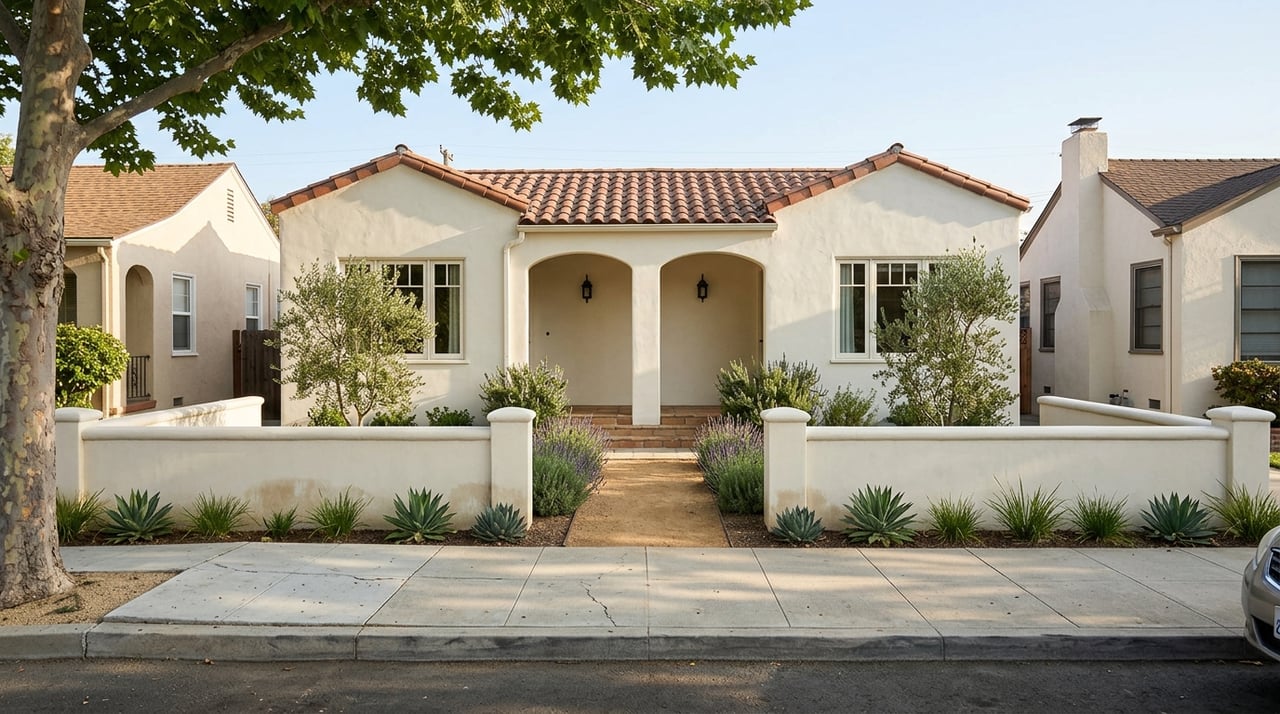
The Atwater Village Neighborhood Council notes that many homes date from the 1920s through the 1940s, including Spanish-style houses, bungalows, and other early residential styles. That older housing stock often creates a more human-scaled streetscape, with architectural variety and a lived-in feel that newer, more uniform development may not offer.
Historic districts add even more texture. The city identifies the Atwater Village Equestrian Historic District as a riverfront equestrian community, and the Brunswick Avenue Fantasy Bungalows Historic District includes one-story single-family houses built from 1926 to 1928.
In practical terms, all of this helps explain why Atwater Village can feel cohesive. The neighborhood reads as residential first, with long-established homes and blocks that still reflect its early development pattern.
History still shows up in the streets
Atwater Village did not get its character overnight. Historic development in the area was supported in part by the Pacific Electric red-car line on Glendale Boulevard.
That transit history helped reinforce the corridor’s local-street pattern over time. Today, even as the neighborhood continues to evolve, pieces of that earlier structure still shape how it looks and functions.
When a neighborhood grows gradually instead of all at once, it often keeps more of its original texture. That layered feel is part of what people respond to in Atwater Village.
The market reflects strong demand
If Atwater Village feels special, the housing market reflects that too. Current market trackers put the neighborhood around a $1.4 million median sale price in March 2026 on Redfin, while Realtor.com reports a $1.50 million median listing price.
Realtor.com also reports a median rent of $3,100 per month, and Redfin describes the area as very competitive, with homes selling in about 54 days on market. Those numbers point to a neighborhood with strong demand and a premium price point within the Eastside market.
For buyers, that means it helps to understand both the lifestyle and the competition. For sellers, it highlights why neighborhood-specific positioning and thoughtful marketing matter in a place where character plays such a big role in value.
Why buyers and sellers pay attention
For buyers, Atwater Village offers something many people want but cannot always find easily in Los Angeles. It feels connected without feeling anonymous, active without feeling overwhelming, and established without feeling frozen in time.
For sellers, that small-town-in-the-city identity is part of the story buyers respond to. A home here is not only about square footage or finishes. It is also about walkable routines, neighborhood character, older architecture, and a visible sense of local community.
That is why Atwater Village tends to stand out in Northeast Los Angeles conversations. Its appeal is both emotional and practical, which is often where the strongest neighborhood demand comes from.
The takeaway on Atwater Village
Atwater Village feels like a small town in the city because several forces point in the same direction. Its river-edge geography makes it feel tucked in. Its pedestrian-oriented retail core supports walking and casual daily interaction. Its farmers market, cleanups, committees, and events create repeat community connection. And its older housing stock helps preserve a residential, village-scale identity.
In a city known for sprawl, Atwater Village feels unusually legible. You can see where the neighborhood begins, experience its main streets, and notice the routines that tie people to the place. That combination is a big reason so many buyers keep it on their radar.
If you are thinking about buying, selling, or simply getting to know the neighborhood more deeply, the right local context can make all the difference. The Lexi Newman Team brings a boutique, hyperlocal approach to helping you navigate Atwater Village and the Eastside with clarity and care.
FAQs
Why does Atwater Village feel different from other Los Angeles neighborhoods?
- Atwater Village feels different because its river-edge geography, contained layout, pedestrian-oriented retail corridor, older housing stock, and recurring community events all create a more intimate neighborhood experience.
What makes Atwater Village walkable for daily life?
- Atwater Village has a fairly walkable layout, with a Walk Score of 73 and a village core along Glendale Boulevard and Los Feliz Boulevard that supports walking to shops, cafes, and everyday stops.
What kind of homes are common in Atwater Village?
- Atwater Village is known for older housing stock built largely from the 1920s through the 1940s, including Spanish-style homes, bungalows, and other early single-family residential styles.
What community events help Atwater Village feel connected?
- The Sunday Atwater Village Certified Farmers Market, monthly cleanups, river-related volunteer efforts, mural activations, and neighborhood event committees all help create a regular sense of community connection.
Is Atwater Village a competitive real estate market?
- Yes. Current market trackers describe Atwater Village as a very competitive market, with a median sale price around $1.4 million in March 2026 and homes selling in about 54 days on market.